Is it Pain?
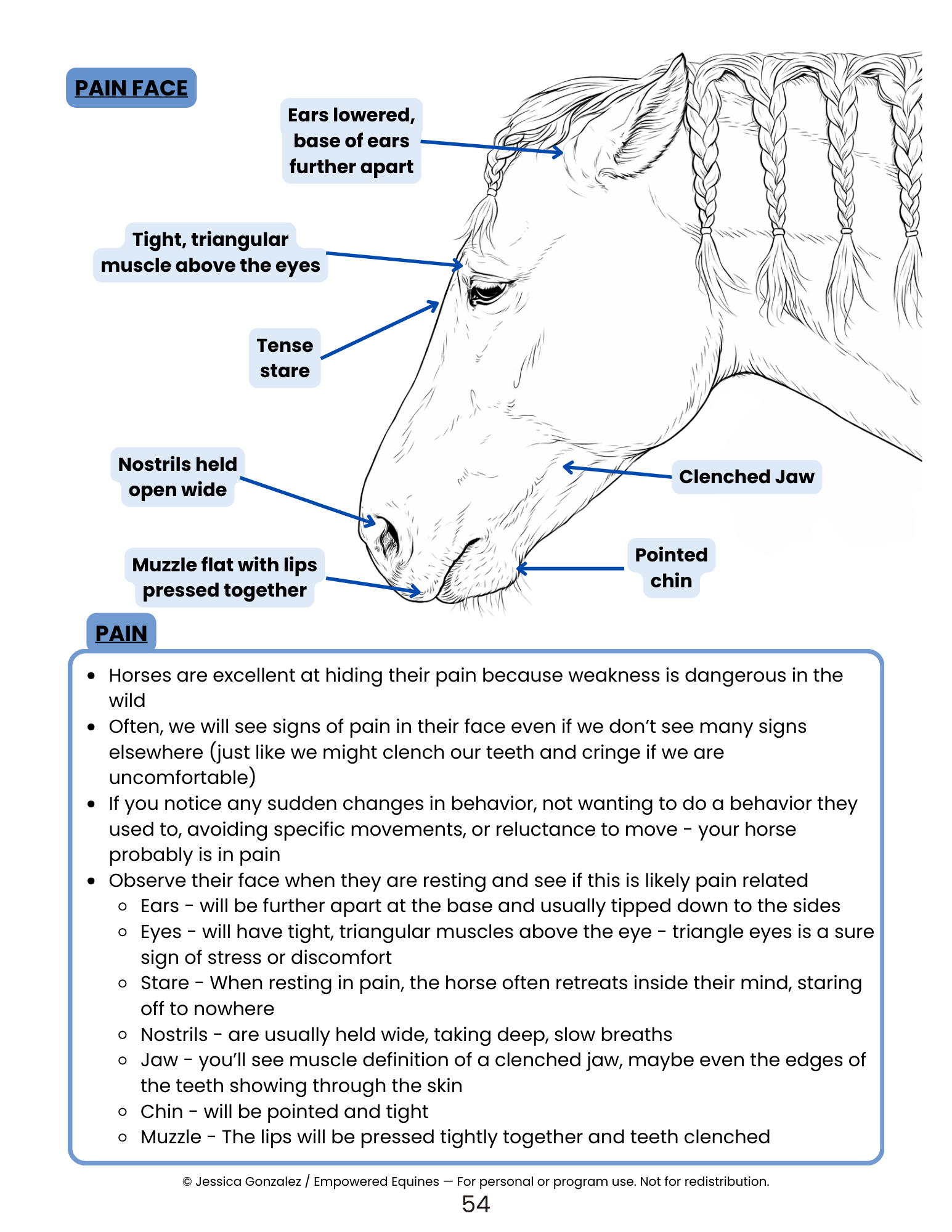
If your horse is acting out and you think it could be pain, IT IS.
I don't know how many times I hear "I asked my vet and they don't think it's pain". Well, I know many people who have told their doctor they have pain and they say they don't. Who's right?
Just because a vet/doctor can't find the pain doesn't mean it doesn't exist. If your horse is acting out or behaving in an uncharacteristic like way, there is a reason, and pain should be at the top of the list.
I've believed Oro has pain for about the last year. It was hard to come around to that belief because he came to us with aggression and major resource insecurity. He spent about a year working through his intense fear-based aggression, relaxing into a brave, but opinionated young dude. Then learning all his life skills, while he still had some issues, he mostly just had a lot of learning to do, not much emotional struggles. Then some major life changes happened and he spiralled to his old angry, insecure, defensive self. We first blamed the life changes, he struggled emotionally, but something wasn't right physically either. Last winter he turned 6 and his behavior got concerning, but we were able to start seeing the pain was localized to his hind end, maybe his stifles?
So we call the vet out, we xray his limbs up and down, we draw blood and test the usual suspects, Lyme, EPM, Vitamin E and Selenium, and PPID. Everything comes back nicely. We have a chiropractor and a body worker check him over, his muscles are very tight, but nothing mechanically wrong. So, we felt we gave him a thorough overhaul and went back to thinking this was behavioral. We put a focus on his training and fixing the emotional component. He did well through the summer, progressed in his riding, explored a wide variety of new toys, became confident in a variety of new skills. But as the cold sets in again, his behavior declines again. What the heck?
We have come to learn about PSSM, a disease we never even considered, no one ever suggested it. We did the hair test for PSSM1 and it came back negative. This left me very much with the mentality of "he's just a jerk of a horse", "we're letting him get away with bad behavior", "maybe we need to push him through this issue and go back to a little force?". I started down the slippery slope. I stopped seeing his language as pain and started to see it as being fresh. But then we discussed the situation with my vet, yet again, and a NUMBER of generous educated equine soundness professionals, and we have come to the conclusion, he has all the classic symptoms of PSSM2/MFM/MIM. We aren't sure if we want to invest in a muscle biopsy with how invasive it is, or a hair genetic test for the other variants of PSSM, when they're not entirely reliable. It's a lot to invest with inconclusive answers.
The truth is, veterinary medicine does not have all the answers, especially if you want a diagnosis while the horse is still alive! If your horse says they're in pain, they are. Listen to them. Believe them. Even if you can't find it, even if your vet dismisses it, keep digging.
In Oro's case we're going to hit him with some targeted diet and lifestyle changes for PSSM2 and see if this helps. If it doesn't help, we'll keep digging. We haven't done x-rays of the spine or pelvis because we aren't able to transport him to a hospital yet, so have only been able to do field x-rays. We can also ultrasound areas of concern or have additional body workers take a look. But diagnostics and professionals come with a price tag, so we'll have to look slowly as we can afford it, and try things out in a cost-effective manner. Hopefully we'll find some answers. But I'm never going to stop believing him. I know who he is when he's not in pain, I know how hard he tries when he is in pain, so I know when he acts out, it's because he's reached his limit. It's not acceptable to push that - and I don't think it would work. Having seen so many PSSM horses trained traditionally have far worse outbursts than our little dude, I'd say the R+ is giving him a safe way to communicate his pain that R- or punishment would not.