Positive Doesn’t Mean PErmissive
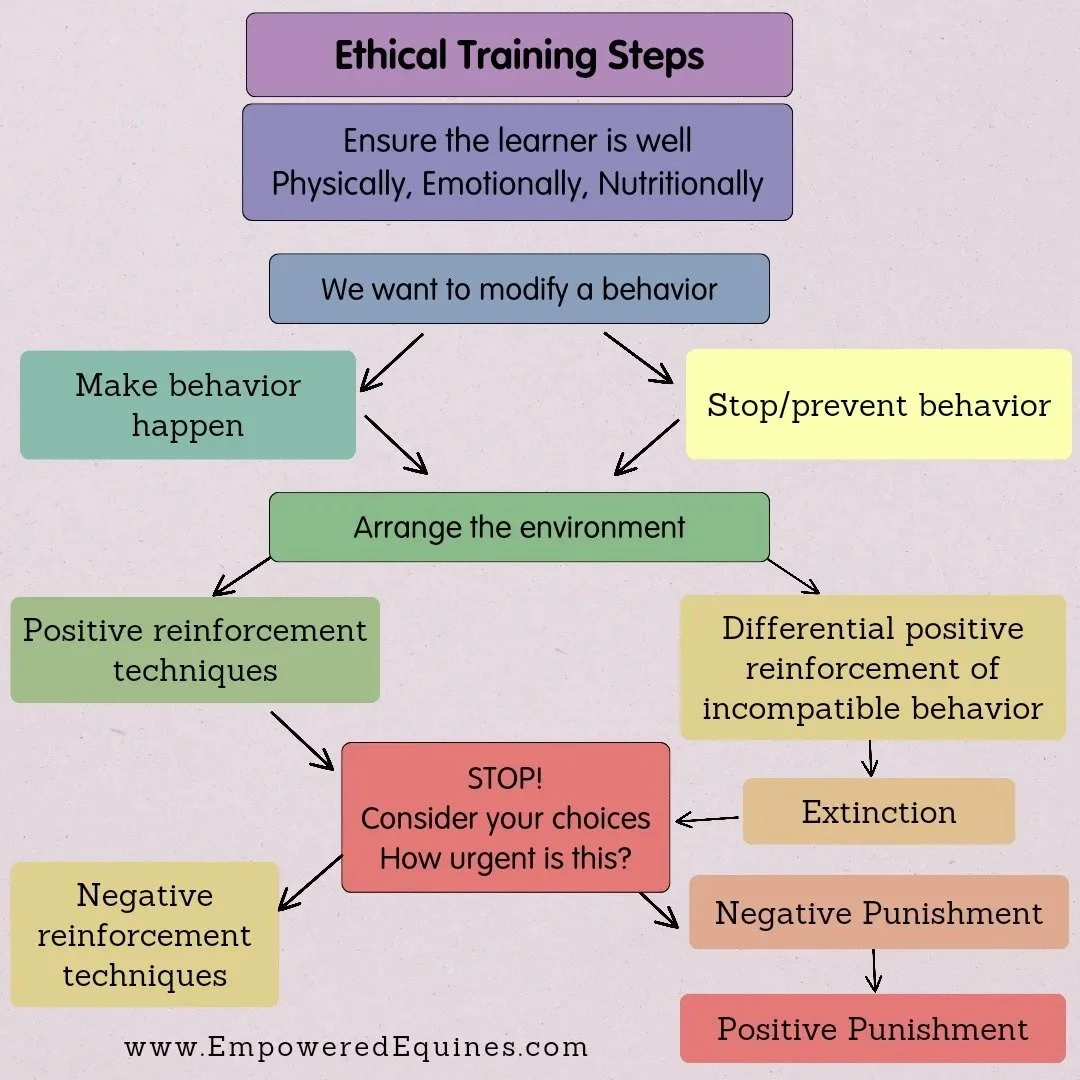
Positive does not mean Permissive.
I had to search for a new farrier for my drafts because my usual doesn't do drafts anymore. Whenever i search for a new professional i try to be honest and upfront. "I use positive reinforcement, I don't use punishment unless absolutely necessary, we are a patient barn. I'd rather pay you for extra time or coming out again than escalate things if its not necessary." Kind of disclaimer. I know i'm odd, if they don't like that it's totally understandable, we just aren't a good fit.
This disclaimer being said, safety of the people around is my top priority. I have kids working with my animals all the time, safety has to be top priority. So how do we balance the two? No punishment, all soft squishy positive training, don't the horses just walk all over us?
Nope! The horses learn from the beginning we have strict criteria for safety and manners around us and food, before we even get into the fun training. We don't just stand by while our horses bite and kick us and drag us around and think "i'll just wait until they behave so i can click". We set them up for safety, success, and hold them to high standards. We are kind, almost always, but that doesn't mean we don't have a strong set of rules and expectations for our horses. We teach them what we want them to do, we set them up for success, we build them towards their goals with steady growth so we can see problems before they explode, and we take the time the horse needs to become confident in doing the right behavior.
Of course, we also utilize guides like the humane hierarchy for emergencies. If someones health or safety (human or horse) is at risk, we do whatever is necessary to get the job done and everyone safe. If the horse needs medical care they aren't ready for, we get the job done even if force is required, we'll fix the emotional impact later. If a horse is putting someone in danger we will do whatever is necessary to get that person to safety. Safety is most important, but not everything is an emergency and we can have patience and do the prep work to make sure its a great experience for everyone.
So, what do we do in emergencies instead? We don't just sit and wait for our horses to choose to do what we want, then feed them for it. We don't sit there while our horse is biting us, dragging us, kicking us, or displaying dangerous behavior and wait until they're done to reinforce the choice to stop hurting us Many people think this is how we do it, as silly as that sounds! So, what DO we do?
Protected Contant
Build safety behaviors
Condition them solidly
Prepare for the hard stuff
Use situational tools to make it easier and safer
When all else fails, stop and re-assess
First of all, we get to safety. By whatever means necessary! If your horse is inflicting bodily harm or putting you at real risk of bodily harm GET OUT OF THERE! Try to get to safety without inflicting harm on the horse, but if you have to wave objects at them, frighten them, or even hit them to protect yourself, while I hate to suggest that, do it! Get safe! Then, the most important step is to learn your lesson. What the heck went wrong? How did we go that far off base?
Ideally, we will prevent every dangerous situation before it happens. We do this by setting our horses up for success using the environment and our training. We utilize protected contact anytime we're not sure how the horse will react. Protected contact just means you work with a barrier between you and the horse. This can be as simple as running up and down a fenceline with your horse, as our kids often do with the rescue horses. It's a fun way to play that lets the horses let loose and be wild, but no one is at risk of being kicked or run over. Or as extreme as putting a horse in stocks or a chute system for medical care. Working with a barrier to prepare for things or do something that is beyond your horse's current training is a fabulous way to keep everyone safe, including the horse. They're less likely to be punished, injured, or have a bad experience if their reactions are limited. This could also be a chemical protection as well, like sedation. I would rather sedate my horse through something I know they can't handle awake, than have risk of anyone getting hurt. We have learned a good dose of oral trazadone or dorm gel can get them sedated enough that a vet can then use syringe sedation. So, this is available as an emergency option too.
Better yet, we can prepare our horses for the hard stuff. This means training them safety behaviors like back up, head down, a SOLID standing facing forward/calm default, shoulder/hip away cues. Then don't just train them until the horse knows them - condition them like crazy. Use these behaviors in every situation you can, on the trailer, on the trails, during a vet exam, during tacking, grooming, playing, riding, everything. Build these behaviors (with R+ of course) SO strongly that the horses respond to the cues without even thinking and they even elicit good feeling hormones. Do Not Skimp on the practice and conditioning!!! So many people teach a cue but don't actually condition it for resilience during hard times. Just because they mostly respond, sorta right, when things are going well, does not mean this behavior is ready to save you in times of need.
Also practice the hard skills. Train the hard behaviors they might need to know in life. Train them to lift their feet and hold them with duration. Train them to stand still while weird and sometimes uncomfortable or scary things are happening. Train them to tolerate things like needles, gentle restraints like head hugs, oral syringes. Train them to be touched all over by weird foreign objects like xray plates or metal tools a vet may use. Prepare them for the nasty smells and alcohol odor the vets may have. Train Your Horse! Before you worry about if your horse can do a fancy show maneuver, focus on, can your horse function in THEIR regular life needs? Can they tolerate a farrier or vet or an emergency situation? These are far more important than if they can jump or change canter leads. They need to be able to live their own life safely.
Sometimes we can also use situational tools. Reverse Round Pens, targets, targets to send them to or station at, body targets to move their body around, barriers in the environment, and so on. Use the world around you to keep yourself safe, the horse safe, and the training effective. Adjust accordingly. An example of this was when our very aggressive mustang colt was new to us he got his hoof stuck high in a hay net, but he still wanted to kick and bite humans. So in the quickest thinking we could do, we had the biggest humans we had pin his body to the wall by leaning into him, while I pulled his foot free, and someone else put a dog toy in his mouth so he couldn't bite me. It's not the best way to handle it but in that very fast second rather than letting him snap his leg, that was the quickest thing we could think to do. Like sitting on an alligator, everyone got out safe and the horse was protected. Then we continued his training so that he wouldn't be so dangerous and if he ever needed our help again, he will welcome it
Now there are times when we either have prepared thoroughly and the S*it hits the fan anyway, or when life happens faster than we were able to prepare. This is reality, don't beat yourself up if something happens and things go sideways. If you can, stop the horse and reset. If you see a training session starting to amp up, the horse's anxiety is rising, their conflict/stress behaviors are showing, a problem is coming. Stop and reset. Sometimes this just means I pause for a moment and do some easy behaviors like head down, back up, target, shoulder away, stand still, where I can reinforce heavily and get the horse focusing on the training and relaxing into the flow of things again, feeling satiated and in control. If we start this and the horse continues to amp up I'll leave the session. Yes, this can be P- to some horses and may be a problem, but I'd rather us all be safe and fix this later! At worst, some signs were missed, or things escalated faster than possible, do whatever you need to to get safe. Again, focus on getting out, don't try to fix the horse's behavior in this moment. This isn't training time!!! This is "get to safety" time! You can fix the training from a place of safety later. Right now, get safe.
Do your homework and prep work! Don't skimp on it! Prepare, over prepare, build reinforcement history, build classical conditioning. Prepare for the things that aren't fun because not preparing makes it SO much worse!