When is it aversive?
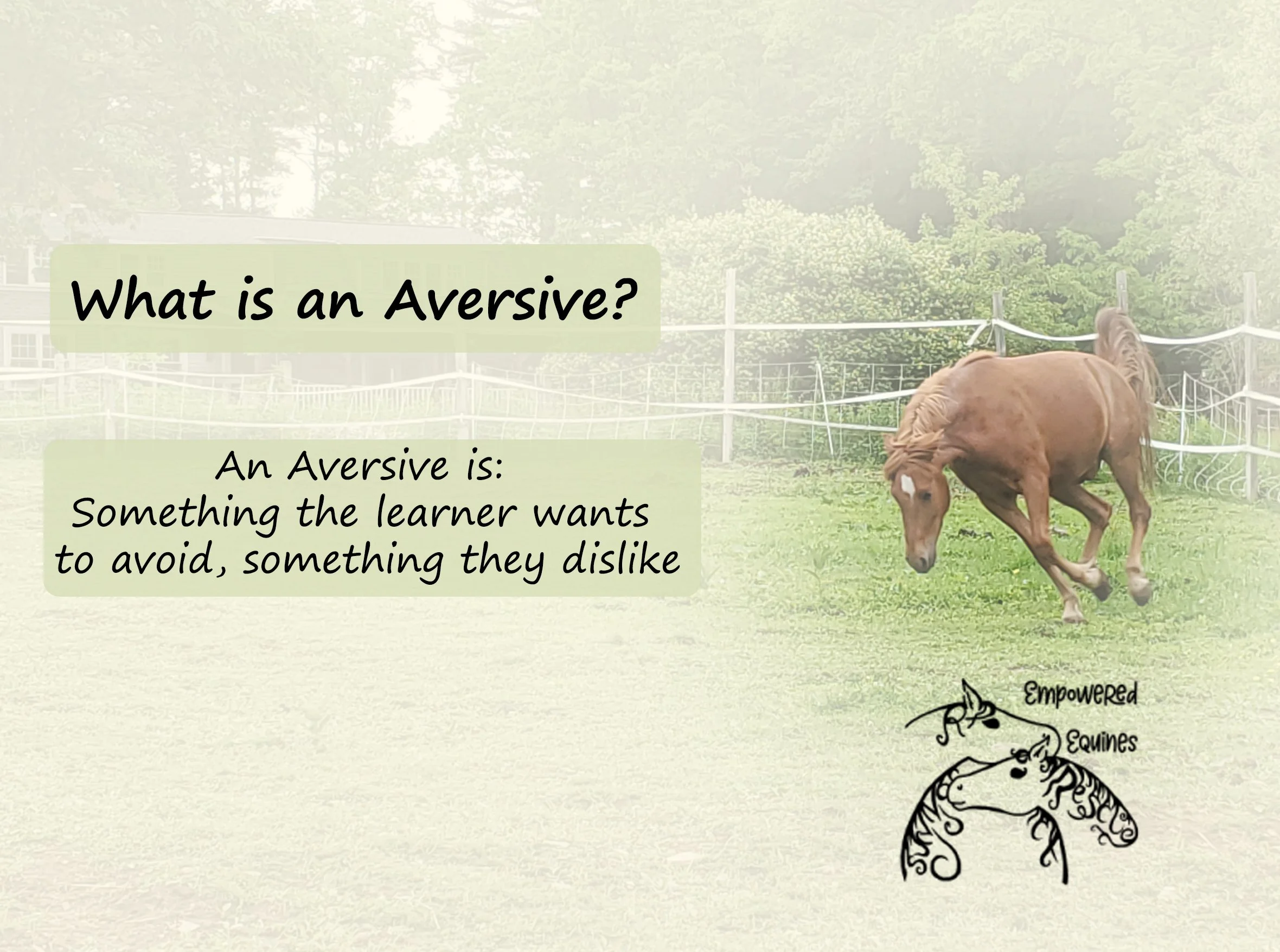
There are a lot of misunderstandings about what are "aversives". Aversives are not necessarily just things that cause the horse physical or emotional harm, it's not just tools of abuse. Many people think that "aversives" are just things we use to Punish the horse. The reality is an "aversive" is any stimulus (sound, smell, sight, taste, or tactile) that the learner wants to avoid.
We've seen R- trainers train using loud noises, like clapping, to teach a horse a behavior. If the horse lowers their head the handler stops making the noise they dislike. The noise isn't abusive or harmful, but it's unpleasant and the horse does the behavior to make it stop/go away.
Aversives can be inherent, unconditioned, something the horse is BORN knowing how they feel about. Like loud noises, sudden movements, waving motions, being chased, tactile annoyance, pain or discomfort (like heat or bugs or injury) ... The brand new baby foals know these stimuli are something to avoid. Whether it's abusive, threatening, concerning, or just annoying, the being knows they don't like it and want it to go away.
Conditioned aversives are anything that's been paired with those inherent aversives. So, a waving/swatting/chasing motion of a whip is inherently aversive to the horse, if we pair holding the whip with waving/chasing/swatting or even tapping, annoying, or at worst, hitting, the horse. The whip becomes a conditioned aversive. The horse learns this tool does things that the horse wants to make go away.
It's not just abusive punishers that are aversives, aversives are anything we want to avoid. So R- works through aversive stimulation. If you apply a stimulus and the horse works to make that stimulus go away, we know that stimulus is aversive to the horse. It's not abusive, cruel, or evil, but it is aversive. These are just definitions of the terms in psychology and behavioral science. It's important we clear these things up to make sure everyone understands the language of animal training/behavioral science, so everyone is on the same page. So we can discuss these emotional topics in a way that's unbiased and sincere, based on facts and data, not our emotional baggage